Eskom is seeking private partners to build up to 6GW of utility-scale renewable energy and battery storage projects, it said on Friday, 9 October. It has issued a request for qualification (RFQ), the first stage of the procurement. The RFQ will produce a panel of pre-qualified partners for the first phase of Eskom Green, its new renewable energy business.
Firms admitted to the panel may later be invited to bid for specific projects through one or more requests for purchase (RFPs), Eskom said. The panel will run for five years, and its members are expected to co-develop and co-invest in projects, from development and financing through to building, operating and maintaining them.
What Eskom brings
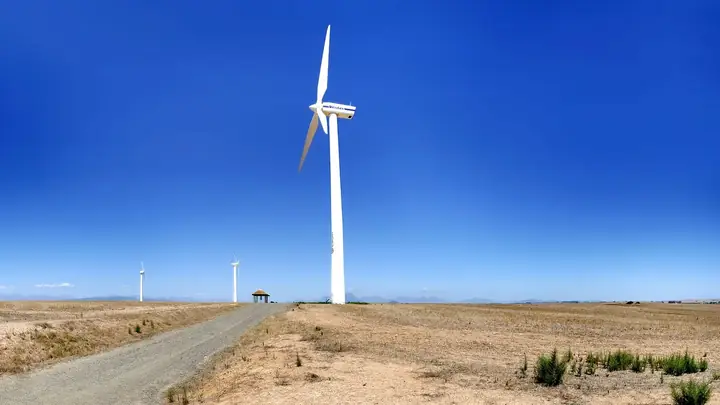
The Phase 1 Programme covers solar photovoltaic (PV), wind, battery energy storage systems (BESS) and other renewable technologies. Eskom will put in projects totalling at least 2GW of solar PV and 1GW of battery storage able to hold 4GWh. Partners can add projects they own or have originated themselves.
Every Eskom project in the programme has a site set aside, Eskom said, though work on land, environmental approvals and grid connections is still under way. It expects each project, including those that partners bring, to be placed in its own ring-fenced company and funded mainly through project finance with limited or no recourse to the owners. Funding and project structures will be settled one project at a time.
Eskom said applicants would have to prove they have the engineering ability, past projects and financial strength to take large renewable projects from development to operation alongside it.
Eskom said the programme would broaden the mix of technologies it generates with and give more customers access to cleaner power. Eskom Green is meant to give industry more ways to decarbonise and to lower the carbon footprint of customers’ electricity, it said.
A system with spare capacity
Eskom made the announcement on the same day as its weekly power system update, which put the energy availability factor for the financial year to 8 October at 68.2%, the highest for that period in six years. Eskom said it had 5,695MW of surplus capacity, and South Africa had gone 511 consecutive days without load-shedding since 16 May 2025.
On 7 October, Electricity and Energy Minister Kgosientsho Ramokgopa confirmed his proposed approach to the first section 34 determination under the 2025 Integrated Resource Plan (IRP 2025). It gives priority to 4,600MW of battery storage and 5,000MW of gas-to-power, a combined 9,600MW, and leaves out new wind and solar, which a later determination will deal with. The Department of Electricity and Energy said all five projects in the first battery storage bid window, totalling 513MW, had reached commercial close and entered construction by June 2025 and had attracted R15.4 billion in investment.
The department said curtailment is adding to system costs. Curtailment is power that could be generated but goes unused, either because the network cannot carry it or because supply exceeds demand. The department said batteries could soak up that surplus and feed it back during the evening peak. It said storage would also need new grid infrastructure to get electricity to consumers.
Neither statement says how Eskom’s programme relates to the government’s procurement sequence. Eskom has said grid access for its sites is still in progress, and the department has said storage must be placed where it can use surplus power without recreating network bottlenecks.
Next steps
The statement gave no closing date for submissions. Eskom Holdings is running the RFQ for now because Eskom Green had not yet been incorporated with the Companies and Intellectual Property Commission when the RFQ was issued. Once that is done, Eskom Holdings will own all of Eskom Green’s shares, and it will notify respondents in writing if the new company takes over the process.