Transnet will spend about R2.2 billion on restorative maintenance of the 861km Sishen to Saldanha iron ore line this year, Transport Minister Barbara Creecy said on Monday.
Creecy gave the figure in notes for a media briefing in Upington, held during the line’s yearly maintenance shutdown from 6 to 16 October. Transnet Rail Infrastructure Manager (TRIM), the entity that manages and maintains the national rail network, is doing the work. The Budget Facility for Infrastructure (BFI) will fund R1.5 billion of this year’s spending, part of R3.4 billion the government has allocated through the BFI for this financial year and the next.
The shutdown gives TRIM a dedicated window for maintenance that is hard to do while trains run, Creecy said. Teams are replacing rails, sleepers and turnouts, screening, rehabilitating the formation, installing culverts and maintaining electrical and signalling equipment. “We cannot invite greater volumes onto the railway without investing in the infrastructure that must carry those volumes,” Creecy said.
Where the money goes
TRIM’s longer-term Ore Line Restoration Programme, which extends to 2030, is valued at about R8.9 billion, Creecy said. Transnet is also spending R1.47 billion on maintaining the ore line’s rolling stock: R752.3 million on wagons and R721.9 million on locomotives. She said similar amounts would follow in the next financial year.
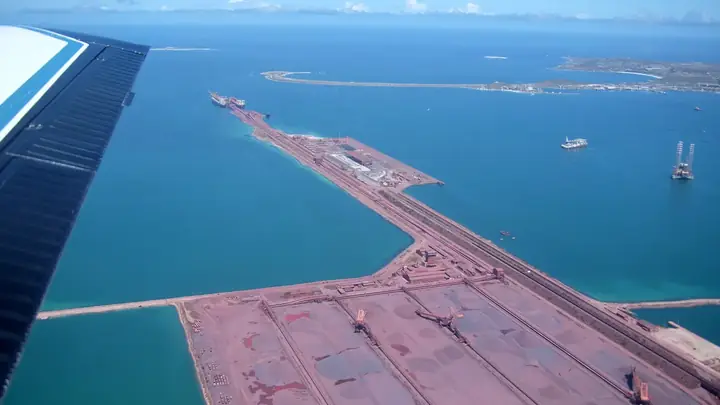
At the port, Transnet National Ports Authority is commissioning a bulk power upgrade at Saldanha with a capital cost of about R750 million, Creecy said. She said the extra power would allow Transnet Port Terminals to run a third tippler and support higher export volumes through the port.
Source: Kumba Iron Ore production and sales report, 23 July 2026. Chart: Rand Desk
The October shutdown has created about 1,300 fixed-term contract opportunities, and more than 600 indirect opportunities are expected from related spending, Creecy said.
What the May shutdown showed
Kumba Iron Ore, the Anglo American group company that mines at Sishen and Kolomela, sells its ore through Saldanha. On 23 July it said the first of two planned 10-day Transnet logistics maintenance shutdowns this year had taken place in May. That work replaced 101km of rail and allowed speed restrictions to be lifted on 26km of the export corridor, Kumba said.
Railings fell during that work, Kumba said. Ore railed to Saldanha for Kumba dropped 8% to 8.9 million tonnes in the second quarter, from 9.7 million tonnes in the first. Kumba’s sales for the half slipped 1% from a year earlier to 18.6 million tonnes.
Kumba said rail performance had stabilised, with fewer derailments. It kept its 2026 sales guidance of 35 to 37 million tonnes, subject to Transnet’s logistics performance, and said its mining input costs had risen with the Middle East conflict.
Rail reform
Government wants rail to carry 250 million tonnes of freight a year by 2029, Creecy said. Transnet moved 167.9 million tonnes by rail in the year to 31 March 2026, up 4.9%, it said in its annual results. It has signed rail access agreements with 11 private train operating companies and expects the first of them to start running in the 2026/27 financial year.
Creecy said operators that invest in locomotives, wagons and staff must be confident that the infrastructure they depend on is becoming safer, more reliable and more predictable. Follow the logistics network on our energy and infrastructure page.
The shutdown ends on 16 October, and Kumba will publish its third-quarter production report on 20 October.